


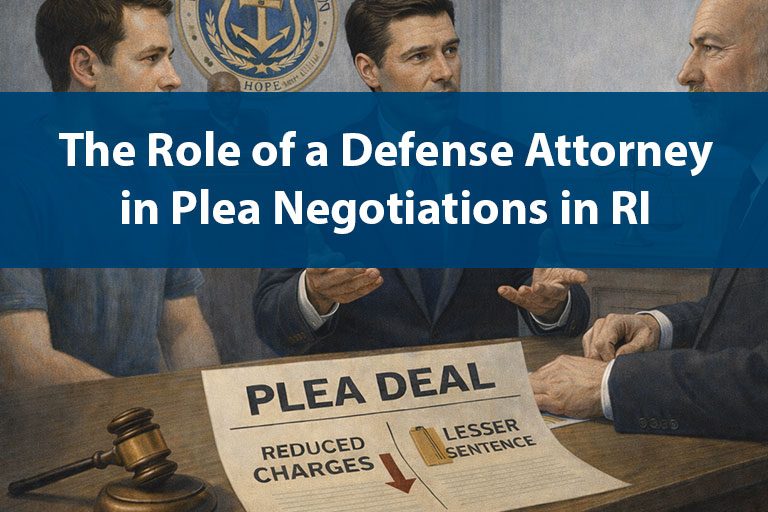
The prosecutor just offered you a plea deal. Your mind is racing with questions—should you take it? Is it fair? What if you say no? You’re probably feeling a mix of confusion, pressure, and fear about making the wrong choice.
Which makes a lot of sense. This decision could affect your freedom, your record, and your future, so you’re right to want to understand it fully before signing anything.
As a Rhode Island criminal defense attorney with over 30 years of experience, including my time as a Special Assistant Attorney General, I’ve negotiated countless plea deals. More importantly, I’ve seen what happens when defendants accept offers without understanding what they’re agreeing to or whether the prosecution even has a strong case against them.
In this guide, you’ll learn what a plea bargain is in Rhode Island, what your attorney should be doing behind the scenes to protect you, and the red flags that signal you’re getting a bad deal.
What is a Plea Bargain in Rhode Island?
A plea bargain is an agreement between you and the prosecution to resolve your case without facing a criminal trial. In exchange for pleading guilty or no contest, you may receive reduced charges, a lighter sentence, or other concessions.
These agreements must be approved by a judge after you say yes. Once accepted, you’ll typically waive your right to trial and limit your ability to appeal the conviction.
In my 30+ years practicing in Rhode Island courts, I’ve seen thousands of these negotiations. Each one is different, and that’s exactly why you need someone who knows what red flags to watch out for in plea bargains.
But what most people don’t realize is that the role of a defense attorney in plea negotiations in Rhode Island begins long before you step into the courtroom.
What Your Defense Attorney Should Be Doing in Plea Negotiations
It’s crucial to know that not all attorneys negotiate the same way. Here’s what I do when I’m defending a client in plea negotiations.
1. Investigating the Prosecution’s Case
Before I even consider a plea offer, I’m looking at the evidence the state actually has. Are there holes in their case? Unreliable witnesses? Problems with how the evidence was collected? I’ve handled cases where prosecutors offer deals because they know their case is weak, and they’re counting on you not knowing that.
2. Challenging the Charges
Sometimes the charges themselves are wrong. In negotiations, I look for opportunities to get charges reduced or dismissed entirely. Having worked as a prosecutor, I know exactly how the state builds its arguments—and where those arguments fall apart.
3. Leveraging Your Strengths
Your attorney should be highlighting everything working in your favor: a clean record, employment, family ties, and willingness to complete treatment programs. These details become negotiating tools for strategic defense attorneys like myself.
4. Fighting to Protect Your Future
A good attorney thinks beyond the immediate sentence—we’re also considering how this affects your record, your job prospects, and your ability to get housing. Sometimes that means pushing for specific plea language that keeps options open down the road, or negotiating terms that won’t create a criminal conviction on your record.
5. Knowing When to Say No
Not every plea offer deserves acceptance. If the prosecution has a weak case, taking it to trial might be your best option. It can be wise to walk away from a “deal” that isn’t actually a good deal for you at all. I’ll help you weigh your options, negotiate, and keep your priorities front of mind.
Red Flags That You’re Getting a Bad Plea Offer
Let me be perfectly clear here. Legitimate offers don’t come with artificial deadlines. If a prosecutor is pressuring you to accept “right now,” that’s usually because they’re worried you’ll realize it’s a bad deal.
Vague terms are another major warning sign. If the agreement isn’t crystal clear about exactly what you’re pleading to and what sentence you’ll receive, don’t sign it. Otherwise, you’re likely to be blindsided at sentencing because you didn’t understand what you agreed to.
Lastly, be wary of an offer if, up to this point, your attorney hasn’t completely looked through the evidence against you. Until that’s done, no attorney can possibly know if the deal is fair. That’s why in every case, I’m examining police reports, interviewing witnesses, and looking for constitutional violations before I even think about accepting a plea offer.
Weighing the Benefits and Risks of Accepting a Plea Bargain
Ultimately, any plea deal will come with both real advantages and serious trade-offs. You have to consider both sides anytime you’re considering an offer from the prosecution.
The advantages are straightforward. You’ll know exactly what sentence you’re facing instead of gambling on what a jury might decide. You’ll avoid the stress of facing a trial. And in many cases, you’ll walk away with reduced charges or lighter penalties than you’d face if convicted at trial.
But the risks are just as real. You’re admitting guilt. You’re giving up your right to trial and your right to challenge the evidence against you. That creates a criminal record that can haunt you when you’re applying for jobs, looking for housing, or trying to get a professional license.
Plea agreements under Rhode Island’s criminal procedure rules also limit your ability to appeal—once you accept the deal, you’ve closed most doors to challenging the conviction later.
And depending on your situation, there could be other consequences you haven’t even thought about yet, like immigration issues for non-citizens, loss of certain civil rights, and difficulties getting loans or financial aid.
Don’t Leave Your Freedom to Chance
Plea negotiations can mean the difference between a conviction that follows you for life and a resolution that protects your future. Good people make mistakes, too, but you shouldn’t have to pay for those mistakes with your freedom or your reputation.
As a defense attorney with over 30 years of experience, I know these negotiations from both sides of the courtroom. I know exactly how prosecutors think, how they approach plea negotiations, and how to find common ground.
If you or a loved one is facing criminal charges in Rhode Island and has been offered a plea deal, don’t make this decision alone.
Call me, S. Joshua Macktaz, Esq., at (401) 861-1155 right now for a free consultation. I’m available 24/7, and I will be the attorney standing next to you in court—not an associate. Your freedom depends on getting this right.
FAQs About Plea Negotiations in Rhode Island
How does a lawyer decide if a plea is good or bad?
I evaluate the strength of the evidence against you, the potential outcomes if we go to trial, your personal goals, and the long-term consequences of accepting the deal. While avoiding jail time is likely a top priority for you, we also need to think about protecting your future and minimizing impacts to your housing or employment options.
Will I be on probation after a plea?
Not automatically—probation is just one possible outcome we can negotiate. Other options include:
- Fines or court costs
- Community service
- Treatment programs
- Suspended sentences
- Filing (for first-time offenders)
The terms are negotiable, which is why having an experienced Rhode Island criminal defense attorney makes all the difference in what deal you actually get
Are plea deals faster than trials in Rhode Island courts?
Yes, plea deals typically resolve Rhode Island cases in weeks instead of months. Trials require extensive preparation, jury selection, and scheduling delays.
That said, know that faster isn’t always better. You should always evaluate a plea deal based on what’s most important to you rather than which path helps you get the case closed as quickly as possible.


